B2B Prospecting
How to Build Your ICP Before Prospecting: The Step Most Teams Skip at a High Cost
Prospecting without an ICP means working in the dark. Learn to build an Ideal Customer Profile with real data and improve B2B conversion.
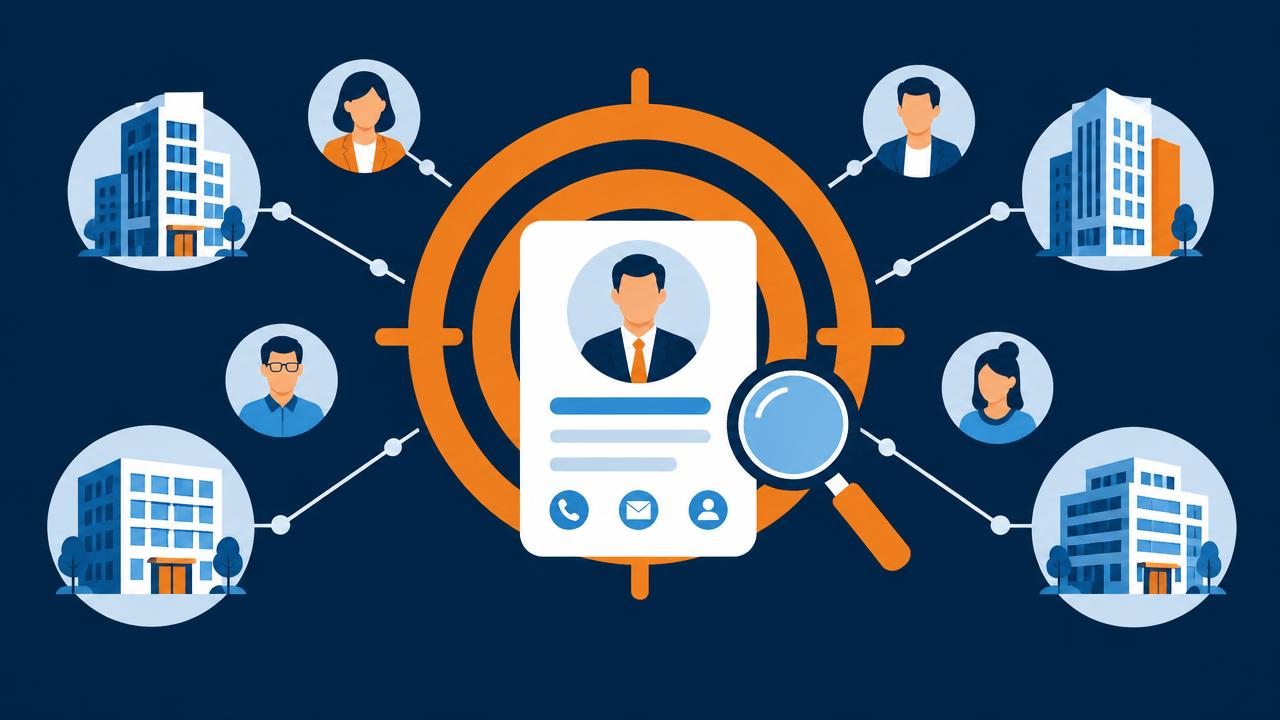
Most companies start prospecting before they know exactly whom they are targeting. The usual result is high volume, low conversion, a frustrated team, and expensive customer acquisition.
The ICP — Ideal Customer Profile — separates efficient prospecting from costly outreach. This diagnosis is Prospecta Clientes’ first step with every new customer: identifying the organizations that fit best before starting conversations.
What an ICP Is and Why It Is Not a Persona
ICP and persona are different concepts that complement each other. The ICP describes the ideal company: industry, size, revenue, location, technological maturity, and growth stage. It is an organizational profile.
The persona describes the person inside that company: role, responsibilities, pain points, goals, and decision-making approach. It is an individual profile.
You need both, but start with the ICP. Knowing the contact does not solve poor company fit. A suitable company may also require conversations with several people: an end user, department leader, buyer, and financial decision-maker.
Why Prospecting Without an ICP Is Expensive
Consider an illustrative scenario, not a performance forecast. An SDR sends 100 daily emails to companies across all industries, sizes, and maturity levels. A 2% response rate produces two replies; assuming both become meetings and 20% progress, that means an average of 0.4 opportunities daily.
With a defined ICP, imagine 60 emails, an 8% response rate, and approximately five meetings if almost every reply leads to scheduling. If half progressed, that would mean around 2.5 opportunities. These figures depend on messaging, offer, channel, and execution; replies do not automatically become meetings.
In this hypothetical scenario, cost per opportunity could fall substantially, potentially to one-third of its previous level, depending on the costs involved. The point is to prioritize fit, not promise rates. Compare total effort, completed meetings, and qualified opportunities. An ICP is an operational lever, not bureaucracy.
How to Build an ICP with Real Data
Step 1 — Analyze Your Best Existing Customers
List the ten customers who pay most, stay longest, complain least, and provide the most referrals. They offer concrete evidence about your ICP.
For each customer, record:
- Industry, employee count, and estimated revenue.
- First contact’s role and final decision-maker’s role.
- Relationship source and time to close.
- Problem solved and outcomes observed.
Look for patterns, but do not mistake high revenue for strong fit. A large contract can consume disproportionate support. Compare value, margin, retention, and implementation effort. Identify what existed before the purchase: processes, a responsible team, and urgency around the problem.
Step 2 — Identify What Your Worst Customers Share
List customers who demand more, pay less, have higher churn, or report lower NPS. Investigate shared characteristics: industry, size, acquisition source, sales objections, and misaligned expectations.
These patterns become disqualification criteria, just as important as positive criteria. However, distinguish structural incompatibility from fixable service failures. Cancellation caused by poor implementation does not prove an entire segment is unsuitable.
Define objective barriers, such as no relevant need, essential technical incompatibility, or insufficient budget for the offer. Avoid excluding companies based solely on a salesperson’s impression. Record the evidence behind each exclusion so another team member can review the reasoning.
Step 3 — Use AI to Validate and Expand
Once you identify the pattern, expand your research. A hypothetical filter could target companies in a defined industry with 50 to 200 employees that hired a sales leader within the past six months.
Tools such as Clay, Apollo, and LinkedIn Sales Navigator can support different research, enrichment, and signal-identification stages, depending on their features and configuration. AI capabilities help organize information, but do not make every data point accurate or current.
Validate sources, dates, duplicates, and roles before outreach. A recent hire suggests change, not proven purchase intent. AI amplifies discoveries grounded in real data; it does not replace that diagnosis. Treat missing information as unknown rather than automatically assuming a company qualifies.
Step 4 — Document and Share with Your Team
An ICP that exists only in the founder’s head is instinct. Document it in plain language, including actual companies from your customer base that fit and others that do not, while respecting confidentiality.
Use an operational worksheet with mandatory criteria, desirable signals, barriers, and information still unknown. Separate what must be confirmed before outreach from what can be validated during a conversation.
The SDR should decide whether a company belongs on the list without asking someone about every record. To calibrate judgment, ask two team members to classify the same accounts and discuss disagreements. Record the decision rationale in your CRM.
Step 5 — Review Every Quarter
Markets change, products evolve, and new customers reveal who buys best. Review the ICP every three months using conversion, retention, churn, and customer success data.
Compare segments and track groups of customers acquired during the same period. Do not change everything after one win or loss. Record the profile version, changes made, and the hypothesis each adjustment tests. This keeps the team aligned while preserving a useful history of targeting decisions.
Signs Your ICP Is Wrong
Watch for these warning signs:
- Long sales cycles without a consistent pattern.
- High churn during the first three months.
- Many meetings that fail to progress.
- Approved proposals followed by cancellations before work begins.
- Satisfied customers who do not renew because of budget.
Each signal calls for investigation, not an automatic conclusion. Long cycles may reflect complex purchasing; stalled meetings may indicate access to the wrong contact.
Cross-check these signals against segment, size, need, implementation capacity, and budget. Turn feedback into data: loss reason, stopping point, and the condition that would prevent the same problem with the next account. Check whether the issue reflects company fit or the sales process itself.
ICPs in New Markets
If you lack customers or are entering another market, the ICP starts as a hypothesis. Begin with the problem your product solves and the organizations that experience it most strongly. Define an initial profile, prospect, validate, and adjust.
In an illustrative scenario, a solution for organizing sales might test companies with an existing sales team and inconsistent processes. Confirm whether the problem is a priority, someone owns the change, and implementation capacity exists.
Work with small batches and comparable criteria. Record what supports or weakens the hypothesis. A clear hypothesis speeds learning; without one, learning happens randomly and usually costs more. Keep the offer and outreach approach reasonably consistent so targeting differences are easier to interpret.
How Prospecta Clientes Builds Customer ICPs
The first step in every project is an ICP diagnosis. Prospecta Clientes analyzes historical data, interviews the sales team and the most successful customers, and delivers a documented profile with qualification and disqualification criteria to guide operations.
Prospecting starts after that diagnosis. Research, data organization, and execution are supported by an integrated ecosystem of different platforms, not a single platform.
To connect the profile to execution, consult the complete B2B prospecting guide and organize outreach with the B2B prospecting cadence guide. A well-targeted list still needs relevant messaging, follow-up, and clear progression criteria.
Want specialist support to build your company’s ICP? Prospecta Clientes conducts the diagnosis to guide the search for suitable prospects using evidence: schedule a free conversation.
FAQ
What is an ICP in B2B sales?
ICP stands for Ideal Customer Profile. It describes the company most likely to buy, remain a customer, and refer others. It includes industry, size, revenue, the decision-maker’s role, and buying stage.
What is the difference between an ICP and a persona?
An ICP describes the ideal company. A persona describes the person inside it, including their role, pain points, responsibilities, and goals. You need both, but start with the ICP.
How often should you review your ICP?
Every quarter, using actual conversion, churn, and customer success data. Significant product or market changes may also justify an earlier review.
How can you define an ICP without an existing customer base?
Start with a hypothesis based on the problem your offer solves. Define observable characteristics, test small groups of companies, and record need, budget, implementation capacity, and reasons for progress or loss. Adjust the profile as evidence develops.
Want to apply this in your operation?
Prospecta combines LinkedIn, multichannel automations, CRM and human SDRs to generate qualified meetings every day.
Keep reading
B2B Prospecting
Prospecção de Clientes B2B: o Guia Completo para Gerar Leads em 2026
O guia definitivo de prospecção B2B em 2026: canais, processo, ferramentas, automação, métricas, erros comuns e FAQ para gerar leads qualificados todos os dias.
B2B Prospecting
Cadência de prospecção B2B: estrutura, exemplos e templates que convertem
Como montar uma cadência de prospecção B2B com LinkedIn, e-mail e WhatsApp. Estruturas testadas, templates de mensagens e métricas de referência.